Monday, November 30, 2009

Yo-Yo Days

O.K! So, I think that we're working hard and learning to adjust to whatever comes, and be content and happy here. And then today happens.
Sometimes you just have to VENT!
We cleaned our house in the early morning because we usually have power and water then. All went well and we sat down to cool off for a minute, after an hour of sweeping and mopping the floors, when the power went out. We knew that we were not going to be able to do what we planned today so, Plan B had to be made and put in effect. We made Plan B and got started, when the power came back on! Surprise! Yeah! Back to Plan A. All our original plans were back in place. Brent cleaned up and I worked on-line for a few minutes.
Then I went in to get ready for the day. It wasn't hair washing day, but with power and water for sure now, I thought I should wash it anyway, just in case tomorrow wasn't so good. "It never goes out again this soon!" was my thought. So, I got totally sudsy and when I went to rinse... almost NO WATER. Oh my word! I squeezed out just enough to rinse off and thought that I could live without water and just bake today. Plan C. I felt sad that I would have to tell Brent that we now had a water issue and that would be his new plan for the day. Then I reached for my blow dryer and the thought came --"Could it be that it's not just the water, but that the power was gone AGAIN and we could not pump the water?" YES! It could. Now I had wet hair, no hair dryer, there would be no cooking, no washing clothes, no internet work, etc. etc.
I think that you could hear the primeval scream clear into town! I did feel somewhat better and made Plan D. I had to do something with my hair. That was all the plan I was ready to make at this point. So, I found some plastic rollers that somebody left in the house and rolled my hair, hoping to make it look OK when it dried. Then I started thinking about our the next new plan for the day..........when...... the power returned.
We feel like we're riding on the power yo-yo . We now have lots of plans for the day and we're not sure any of them will happen. Such is Life in the Congo some days. Well! OK! Most days! So, it's on to Plan whatever!! VENTING does help!

Friday, November 27, 2009

It's T-H-A-N-K-S-G-I-V-I-N-G!-!-!-!

THANKSGIVING is Brent's favorite holiday. I'm not sure why, but it seems fitting that a day that is rather quiet, homey, relaxed & full of family, food & football should be his favorite day.
This year in the Congo was pretty different. No football, turkey, dressing, yams, cranberries, pumpkin pies. or parades to be found here. Nobody we talked to had even heard of Thanksgiving nor did they get it when we explained it to them. But we had a great day!
I must admit that I was feeling a bit down about the whole holiday season. No family around, no traditional foods, no way to send gifts to our family or friends. I even missed football. It was all a little sad to me, despite the fact that I am thankful to be a missionary this year.
So, we decided to do something to make it better. We made some Rice Krispy treats (which are fast becoming a Congolese favorite) for three brothers who help us, delivered them, told them about Thanksgiving and that we were thankful for their help.
Then Brent offered to take me to a fabric store. Those of you who know Brent will know how desperate he was to help me feel happier. He gets a rash when I suggest we go to a fabric store at home. But, that was the offer. What a great guy! So we headed downtown.
We had no police harassment. This day was looking up!
Stores are mostly very small (smaller than most Circle K's). They all look alike to me, so we walked slowly down the street looking for the word "tissu" (Fabric in French). We found it. But just beyond it, I saw an appliance store. I thought that we might be able to find a generator there, so we went to look. Our power went out last night in the middle of baking banana bread and the bread barely survived. It was out from 5-11pm. So.........we're getting serious about this generator. We've only had six days in November without some kind of power outage. But, there was no generator. However, it was also a grocery, housewares, etc store.
Walmart-Congo style.
It had Chinese food items, tortilla like chips, jello, sheets, dishes and other things we haven’t seen before. Then we found CHICKEN BREASTS! This was a big find. We haven't even found whole chickens lately. We walked around the store and also found this big, nice crock pot!! It had obviously been sitting on the shelf for a long time just waiting for us, because it was very dusty and dirty, but it works.
What a find! Two great things in one day!
And then, by the check-out stand, we found a tiny "Charlie Brown" tree and blue and silver Chinese ornaments.
I was thrilled. What a nice blessing!
And it was all on their "Christmas sale" 15% off.
Black Friday in the Congo!!
Two grandsons, Isaac and Trevor,
made pictures, scanned & sent them to us.
We put them up on our missionary board.
We had a grand Thanksgiving feast.
We even had cherry pie with ice cream that we found last week. It’s usually hard to find and about $12 a half gallon. This was the only one marked down to $3. We thought it was just for our Thanksgiving. We had chicken rolls, potatoes and gravy, carrots and peas (the peas were another great find and Brent’s favorite), and sliced French bread. We sat at our big 7 ft. dining room table, just the two of us. We must have looked pretty funny, but it was a wonderful Thanksgiving feast.
Then that night, we watched a new TV show that Scott sent us. He took it off the computer and shrunk it down so that it was small enough to send to us. We had a little pie and ice cream and a movie at the end of the day. It’s really the first day we have taken away from missionary work since we got here. It was a fabulous day! We talked to our kids on Skype when they were all together at our house Thanksgiving night . (5 am Friday our time) It was just the usual WONDERFUL chaos of the whole group together. The girls were spread out on the floor studying the ads and getting ready for shopping at 5am on Fri. The cousins were running all over. The guys were sitting on the couch looking totally content in the midst of the craziness. It was so good to feel like we were right there. We talked and the we just watched for a long time.

I felt badly for getting discouraged. I didn't have enough faith that the Lord would help His missionaries have a good day. But He sure did! All these things may seem of little consequence in ordinary life, but here, they were a great blessing! I will try to remember this day the next time I anticipate disappointment.
This, our first day off since we came to the Congo, was perfect! It was so good to "unstring our bows" and enjoy a wonderful Thanksgiving.

Monday, November 23, 2009

"A Rose by Any Other Name Would Smell as Sweet" W.Shakespeare

In Romeo and Juliet Shakespeare says, "A rose by any other name would smell as sweet" This takes on a whole new meaning in Africa. Here, some things are just totally different and beyond our understanding. One of them is names. We have to be very careful when we get baptismal and ordination paperwork that the name for the person is the same on all forms and that the people involved have used the same name every time. They have many names and they can go by any of them. They don't always put them in the same order and they don't necessarily have any name in common with their family members. The relationships are also confusing. The following is an experience that Brent had and recorded in his journal. It illustrates this well.

"In my interview with Elder Jacques Kapele, he told me that on our last visit I had given him a letter from his family in Likasi and that it had informed him that his sister had died. I was horrified that I had been the bearer of such terrible news and didn’t even know it until two weeks later. In my efforts to console him, I asked some questions about his sister, including how old she was. He said she was 73. Then I was confused. How could this be? In further probing, I learned that she was actually his aunt, not his sister. In African society, names and family relationships are not very important. They use any one of a number of names they have been given and it’s not always the same name or in the same order. They also call everyone in their extended family, and good friends, their “brother” and their “sister” so you never really know the exact relationship."

I talked to a man at church one day who told me that one of our elders was his "brother." They looked nothing alike, so I pursued the conversation. He said they didn't look alike because they didn't have the same mother and father. Then I was really confused. It turned out that they were cousins.

They also call their wives their "sister."

I asked Monga about it one day when I was totally confused by this whole name situation. He explained that they are all brothers and sisters. I asked how they determined what the relationships really are. He looked at me like I was a little slow and said, "Does it matter? We are all brothers and sisters." Quite an interesting little part of African culture. Many people also don't know their birthdays. They may know the year, but no more. There are few written records here. Even now, marriages, births, deaths, etc. are often not recorded. It's hard for the people to adjust to the idea that the Lord's church is a record keeping church and records are important. And oh, does it ever make Family History work a challenge!


Sunday, November 22, 2009

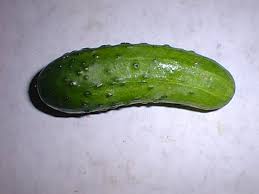
Pickles

We have had a very busy week. Brent interviewed all the elders and it took all morning for the full week. We also went to deliver their support money and their cleaning supplies. It can get discouraging because they generally have a long list of things that they want and are not shy about asking.
We have also had continuing problems with power and water. We have only had two days in November when they were working all day. We had 7 days when it has been off for more than 5 hours. Two days it was out for more than 10 hours. It is a challenge to have no power or water. We are convinced that we need to get a generator and need to put that on the top of the priority list,
Elder Mpoyi spent two days with us this week. He's going to the clinic twice a day for shots for his infection. We feel like he's finally improving. His companion needed to do some missionary work, so Elder Mpoyi stayed with us during the day. That meant that he had lunch with us. We introduced him to some new foods that we thought were pretty normal, but were firsts for him--tuna fish, pears, watermelon, potato chips, gouda cheese, oatmeal chocolate chip cookies, rice krispy treats and dill pickles. It was hilarious! He loved the cookies,RK treats, and chips. The cheese was OK. He didn’t like the watermelon and he only tasted the pear and then opted for an apple. Then he tried a dill pickle. We even warned him that it was strange and sour.
See full size image
His expression was hilarious! He did NOT like it at all!! Isn't it amazing that he’d never tasted any of those things? He kept pointing to them and asking what they were. We tried to explain the American Hamburger to him, but weren't too successful! The elders mostly eat rice, beans, cassava, and bread. They eat apples, onions, potatoes and mangos too. I worry that they don't get a very balanced diet. Elder Mpoyi even talked to the Webbs on Skype this week. It wasn't much of a conversation since he speaks almost no English and Corinne got tongue tied when he started speaking French. I can relate! He's a great young man.

Today we went to visit a branch in Kipushi, 30 Km (18 miles) from our house. We took the executive secretary to the mission presidency and a high councilor from the Katuba Stake with us. Kipushi is not directly under our supervision since it’s a branch that is part of a stake, but we needed to go and see what we could do with missionaries in that area. They have none right now. The mission will be getting about 30 new elders in the next few months so we are looking at places they can be used. Last weekend we had been on a much longer trip on a dirt road in the rain. We thought this trip would be a nice, easy drive. It took us an hour to drive 18 miles. There is something harder to navigate than a dirt road in the rain. It’s a paved road that has seen no repairs for 30 years. It’s a good thing that we have four-wheel drive, even with it, we had a bumpy ride.

There are very deep gutters on the sides of the roads.

It makes it impossible to go off-road to avoid the pot holes.

This branch just rented a house to meet in and they were very happy to have it. It is in very bad shape. There is almost no paint on the walls and the floors are in poor condition. There are broken windows and I didn't dare go in the bathroom. Brent said the health inspectors shouldn't either. We hope that they can get some paint, and a lot of other things, so that it can look like a place of worship. It will have to go through the Stake and Temporal Affairs, but it sure needs to happen.

There were only a few men there when we started but by the end there were about 40 members and 5 investigators (in French investigators are called called ‘friends of the church.’ I love it!) When the meetings started the spirit was wonderful and strong. They taught the gospel with power and knowledge. Their one deacon passed the sacrament, dressed in slacks, and a white shirt and tie, fulfilled his assignment with dignity and reverence. They don’t have the idea yet about sitting as families. The children sat in front, the men next and the women in the back. In RS the Pres gave a wonderful lesson on honoring our baptismal covenants. She did it in French and then in Swahili. I think it was for my benefit and it was so kind of her. We spoke in Sacrament Meeting, as usual. We just can't seem to get the message across that we are just there to visit. But, they listened attentively and smiled and encouraged me in my poor French. They are always amazed that Brent speaks such wonderful French. They often comment that he speaks better French than they do. It pleases them to be able to communicate so well with him.

Some Relief Society Sisters

The Men of the Branch, with Brent and the other visiting leaders

The Primary and the Primary Preisdent on the bottom right

The young men of the branch

The Young Women and Lorraine

Once the camera comes out everybody wants to get in the pictures.

We really enjoy Sundays when we get to be with the people of the church. It's well worth the effort to get there! It’s a great joy to feel their spirits.


Wednesday, November 18, 2009

Photo-only $75

On the road between Lubumbashi an Kolwezi there are toll booths. I'm not just sure what the toll is for.
I think in some places where they have toll roads the money is used for upkeep of the road.
Don't think that's the case here, having traveled these roads.


This trip it was raining and the villages look even bleaker in the rain.
The roads and villages were very muddy.
Some villages were flooded
I guess that you are not supposed to take pictures near toll booths. There are no signs posted and I'm not sure how you know that. I learned the hard way. Just outside of Likasi we stopped at the toll booth. Brent got out to pay. I took a picture. No sooner had I snapped the picture than a policeman came to my window motioning me to roll it down and give him the camera. I didn't do it, but Monga told me to give him the camera. He rolled down his window to talk to them and they quickly grabbed the camera from his hand. They said that they feared that we were spies who were taking pictures of the toll booth so we could rob it. They wanted $400 to let us go. They threatened to take us back to Likasi to the police station as spies. Fifteen minutes later, much discussion with Monga and $75 prevailed and we were allowed to continue on our trip. It was quite upsetting to us all.

This is my $75 picture. It's a little hut on the top of a termite mound.

Tuesday, November 17, 2009

Hangin' with the Saints

One of the great things we get to do is visit branches, districts, wards and stakes. This week we visited Kolwezi for District Conference. They are such good people and they are working to learn the procedures and the organization of the church. If they knew them as well as they know doctrine, nothing could stop them. But they are in need of a lot of training on how to run the programs of the church. Trying to help them understand the structure and programs of the church and meshing that with their culture is the hard part of our job.

This is the District President with Brent
The other thing that we are here to do is very easy. It's to get know them, give them support and love from the mission. That part is just plain wonderful.
This is the District Relief Society President
The thing she wanted to talk about most was a sewing machine for each of the three branches. With that they could teach the women to sew. This really isn't in our area of responsiblity or something we can do with mission funds, but we will find a way to get them. It's a worthwhile goal and would make a substantial, practical difference for them.

After the meetings Brent always has to take care of church business. They reorganized the district presidency and had to set people apart. I got to spend time with people.
Being with the children is my very favorite thing. I had so much fun with these children. They tried to teach me a few words in Swahili and I tried to teach them those same words in English. We all giggled and had a great time. The seven children on the left belong to one of the branch Primary presidents. All but two of the others came with her to conference. When she arrived at church, she walked in with this little trail of 13 "ducklings" coming along behind her. It was so cute! Two of the little girls have their siblings wrapped on their backs. It's a common thing here. Moms and older siblings (sometimes not much bigger than the baby) wrap the little ones on their backs and carry them everywhere. The babies seem very contented and sleep most of the time.
I've never seen one squirming and trying to get out. Our grandkids would be climbing all over the place and out of there in a minute.
Moms always carry their babies this way.
These are the Scouts of the District plus a few onlookers
They returned from an outing just after conference started. They dropped their backpacks in a room and filed into the back of the cultural hall. After the meetings they stood in the parking lot in a circle and danced and sang. They had a great time and it was fun to watch them. I thought it was great that they were there and they were awesome.
There are great, faithful members everywhere we go, doing their best and working to better their lives and the world. These African pioneers are inspiring. They are the hope, not just for the church, but for all of Africa.


Sunday, November 15, 2009

The Giants

I think that our trip to Kolwezi will have to be recorded a piece at a time. We were only gone for 36 hours, but it felt like a week.
This is the most inspiring thing that happened while we were there. It's one of the most inspiring things that we have ever seen personally. These are three men whom we hope never to forget. When we begin to think we have challenges, we will think of these three Congolese Saints. We don't even know their names, but their faith and courage are beyond our imagination.
These three men live in a village in the bush North of Kolwezi called Kinkondja. Having seen how it is in the villages, we would never have guessed that they lived there. Somehow, we're not sure exactly how, they learned about the church and were baptized. There are now 15 members, 6 priests, 20 investigators, all of whom usually attend church on Sunday. There are, however, 30 tithe payers. They bring the tithing from the village every 6 months when they come to District Conference. This helps us better understand the sacred nature of tithing.

They do not have the full programs of the church. As far as we know, they hold Sunday School and study only from the scriptures. They have not even been given permission to administer the sacrament. But they are faithful Saints. For District Conference some of them come to Kolwezi twice a year. This time it was only these three. It's the rainy season and it rains almost every day, making travel hard. In the dry season 10-20 people will come. Sometimes they come for a week or so in order to go to a regular church meeting to take the sacrament. It is such a show of strength and faith that they continue to meet and, even more so, that they come to District Conference. We have known too many in our life who think that Stake Conference is a vacation weekend in the church. The reason we find their coming so inspiring is that the village they live in is 520 km from Kolwezi. That's roughly 300 miles and they WALK all the way. Either there are no transports that go that far or they can't afford to pay for them. So, they WALK 300 miles to attend District Conference. It took them 2 weeks this time. That's 20 miles a day. They will stay for a week or so and then WALK another 300 miles home. On the way home they will carry boxes on their heads containing copies of the Book of Mormon that they requested. I wondered to myself--If I got up one Sunday in Tempe and my car wasn't working, would I walk to the church a few blocks away from home? Or would I just stay home because it was too far or too hot? And if it was raining all day as I walked, would I chose to go?
Before I knew who they were on Saturday, I actually noticed them. They were sitting on the front row in the chapel at the Sat. adult session and they seemed to be listening intently and taking notes. Then we were told about them. Again on Sun. I saw them on the front row and never missing a word. They had walked 300 miles to hear the gospel messages and to feel the spirit of a group of Saints. I wished so much that I had something profound to say to them and prayed for the ability to give the message I had prepared. I wanted to at least be able to be understood. I had spent many hours of work on my talk and five hours of hard traveling to get to Kolwezi, but it seemed like a pathetic offering compared to their offering made to the Lord by being there.
After the meeting Brent met with them for a few minutes. They asked if we were going to come to see their group. It almost broke our hearts. I'm not sure that a car could even get to their village and even in a car, traveling for another 300 miles down those dirt roads seems beyond our ability. But I will never forget those three great men, very small and humble in the eyes of the world, but amazing giants among men to me. I hope their demonstration of faith and devotion will be heard by many and inspire us to be more committed and willing to sacrifice. I hope to see them again and I think that I will at the next District conference in Kolwezi six months from now.

Monga

This weekend we went to Kolwezi to preside at a member district conference. We invited our friend and African mentor, Brother Monga, to accompany us as our guide and driver because of the unique challenges of surface travel in the Congo. He knows the road to Kolwezi better than anybody. As the director of Seminary and Institute in this area he goes there about once a month. That alone makes him amazing! But he is our great friend and helper and everybody in the area knows Monga. Anything you want to know or do people say, ask Brother Monga.
Frere Elie Monga
I want to record his story, which we learned on our trip. You can learn a lot about a person in 10 hours in the car.
When Monga was 21, he was looking for answers to important life questions. At that time he met, what he called, "an old man" who told him about a church and a special book. He loaned a copy of the Book to Mormon to Monga for three days. Monga read it straight through and said that, as he read, all the questions about the meaning of life were answered for him. He knew that he needed to find this church. At that time the church didn't exist in Kolwezi, but he learned that it was in Lubumbashi, which is 300 km away, about 180 miles. So, Monga went to work in the silver mines to earn enough money to go to Lubumbasi. When he finally got there, he studied and was baptized. He wanted to serve a mission, but by that time he was beyond the age limit (27), but somehow he got special permission to go. He was called to the Kinshasa mission and served in Brazzaville for a few months when terrible political problems arose and there was much killing and war in Brazzaville. The mission was closed. They sent the missionaries to the Ivory Coast, where he worked for a few months. Then the Kinshasa mission was opened again and he returned to Brazzaville, although the mission president in the Ivory Coast wanted the elders to stay because they were so devoted and the work increased with them there. He worked in Brazzaville again for only a few months and again a bloody civil war began. Again the missionaries were preparing to be sent home, when the mission president from the Ivory Coast asked to have them returned to his mission. So, Monga was able to return there and finish his mission. While he was on his mission his parents, who had objected to his baptism, were taught the missionary lessons and joined the church. When Monga returned from his mission, he wanted to bring the church to Kolwezi, so he went there to teach. He taught 82 people about the gospel in just a short time. They were all baptized. They went to the river and baptized all 82 people in one day. He said they baptized continuously from 4:00 pm until 8:30 pm that day. This group of saints grew to be a strong branch in Kolwezi until unrest between two tribes caused many of the members to move away. Most of the group moved to Luputa, where there are now several very strong branches of the church.
So, everybody in Luputa knows Monga too. Kolwezi suffered from this mass exodus and now only three branches have survived. Monga told us that he still had a few relatives in Kolwezi.
Soeur Monga
This is the second person that I met when we got to the chapel. She is the first counselor in the District Relief Society and is Monga's sister-in-law.
The next person I met was his brother...then an uncle...then another brother... his cousin..another sister-in-law, his niece, his nephew, his wife's brother, a person baptized by Monga, a person whose father was baptized by Monga and so it went all day long. Everybody was related to, baptized or taught in Seminary by Monga. Monga later went to the Univesity of Lubumbashi and graduated with a degree in English. He has translated for most of the General Authorities who have come to the Congo. What a difference one young man, who was searching for truth, has made here in the Congo. And what a difference it makes to us to have Monga in our African world. He is a man of honor, wisdom, charity and humor to match anybody that we have ever met. And he is one crazy driver. When I am recovered enough to write about the trip to Kolwezi, there will be much more to tell about our friend, Monga.

Friday, November 13, 2009

The Barrier

We have found that in Lubumbashi people are very friendly. They say Bonjour or Jambo to each other on the streets and in the market places. They smile and are very pleasant to us. However, the environment is not really conducive to friendship because of ...
LA BARRIERE.
In the cities, people have a very high fence and a gate at their
residences and at some businesses.
This is the one place we've had dinner out since we got here.
The call the gates La Barrieres.
The fences and barrieres create very secure environments.
We're not sure that this security is really needed or just a
bit of paranoia.. Perhaps it is a hold over from a less stable time.
We don't feel fearful at all. But security is an important thing
here in the Congo. There are also bars on most doors and
windows in the homes and businesses.
If you live in a very nice area you have a big Barriere and a
Garde-Barriere, who watches your place and comes running
when you pull up and honk or get in your car.
(Africa's answer to automatic door openers.)
This is Brent with Robert, He's our
Garde-Barriere/Gardner/Car washer/All-around Outside Helper
Right next to our gate, inside our walls, there is a tiny one room
house (about the size of two twin mattresses). Sometimes
Robert goes in there to rest and when we go out of town, he
stays there while we're gone. Before we came, when the house
was empty, he live there 24 hours a day for 6 months.
Sometimes people have have a Barriere, but no Garde-Barriere.
Some of the Barrieres are very interesting, colorful and nice.
This is the most ostentatious one areound.
We call it the port-a-potty barriere.
Sometimes there is barbed wire rolled on the top of the walls or
glass embedded in them.
In nice areas, where people might have a car, they are made so that
you can drive a car into the yard for security.
Sometimes they also have a small door in them so that you don't
have to open the big gates when you want to walk outside,
like ours has.

Sometimes people don't bother to close them, but most people
keep them locked!
If you want to get into a compound you honk or knock on the
barriere with a rock. Then the people inside decide if they want
to let you in or not.
Some are not much security.
Some are only big enough to walk through, but give you some
security in your yard. This cute girls lives next to a missionary
apartment and can not keep from peeking out to see the
white people. She never will wave or talk to us.
Most of our missionaries homes only have small gates, but we
do require them to have one. We can tell if they're home
because when they come home the padlock is put on the\
inside of the barriere. When they are gone, it's on the outside.
In many neighborhoods, people have no barrieres at all.
They also often don't have doors or windows in their
home.Sometimes they just have fabric at the door.
You can buy barriers on the street. Some are plain, some rather decorative.

A few are works of art.

It is nice to have the security of a barriere and fencing no
matter where you live, but it is a serious deterrent to
getting acquainted with your neighbors. We think it must
also be a problem for missionary work. It's hard to meet
anybody when they are all locked behind their Barrieres.

I think it was Robert Frost who said fences make
good neighbors In this case, I don't know. We
have no idea who lives right next door to us.


Monday, November 9, 2009

A Thing of Beauty is a Joy Forever

Here in the Congo I wouldn't say that we have found a great many beautiful things. There are many beautiful people, but the land is not what you would call beautiful. It's the dry season and it may look different after the rains come, but thus far it's not a treat to the eyes.
However, it is midsummer and we have discovered one of the most beautiful sites in the world is here in midsummer.
THE RED TREES
They grow to be enormous.
.
They are everywhere and they are striking in their contrast to the brown dirt and the drab colors in the buildings and surrounding landscape.
The trunks are as interesting as their scarlet flowers.
This is what we lovingly (and exaggeratively) call "the park" in our neighborhood
One in "the park" that forms a canopy over many feet.
I have never seen anything prettier than these trees. Wish pictures could capture their magnificence.
We enjoy them so much. They will be remembered forever as a joy we found in the Congo.